Nuclear Fuel Cycle: Fabrication
Fletcher Newton is an expert in all aspects of the nuclear fuel industry, including fuel fabrication. He has worked with major fuel fabricators such as BWXT, TVEL, and Nuclear Fuel Services, as well as the three commercial fabricators in the US: Framatome, GNF, and Westingtonhouse. His understanding of the complexities involved in designing and manufacturing fuel assemblies, and the required close cooperation between LEU suppliers and the fabricator, makes him a valuable consultant for utilities seeking cost-effective, high-performance fuel solutions. As well as for investors seeking to gain a better understanding of the risks utilities can face if they are unable to deliver LEU to their fabricators on time. With sanctions being imposed on the sale of Russian LEU, Western utilities now face a greater risk of disruptions in their fuel supplies. Understanding these risks is key to understanding the future of the world’s nuclear fuel market and to making policy decisions that balance the needs of utilities with those of their fuel suppliers and fabricators.
Fabrication
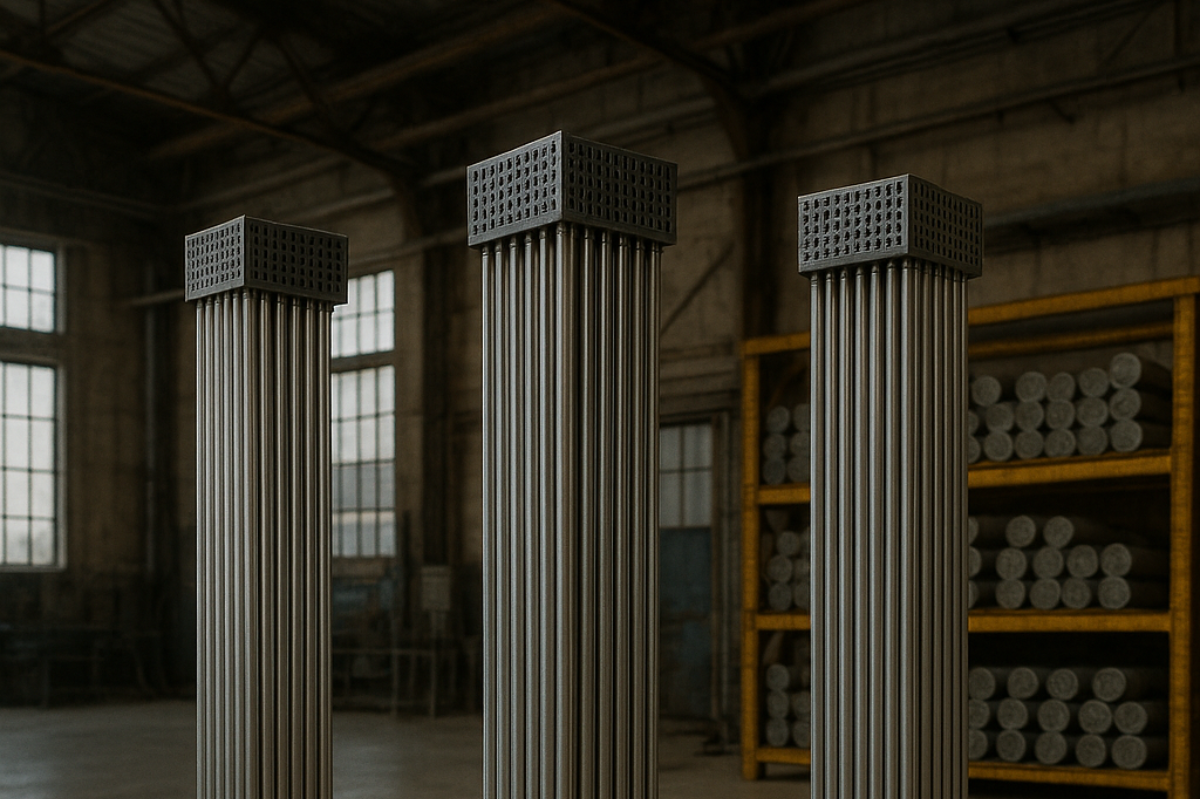
Fabrication is the last stage in producing nuclear fuel and involves taking a utility’s EUP and turning it into the actual fuel assemblies that are loaded into the reactor core. Most light-water reactors operate on fuel cycles of 18 to 24 months, which means they must generally replace one-third of their fuel every 18-24 months. The reason for this is quite simple: like a giant teakettle, the fundamental purpose of a nuclear reactor is to generate heat over a sustained period of time as safely and reliably as possible. To do this, each fuel bundle must be designed in such a way as to maximize the amount of heat it can produce and minimize the amount of fission products produced during the fuel cycle that tend to reduce the amount of heat being produced.
The fabricator will first “de-convert” the EUP (which is still in the form of enriched UF6) to solid UO2 powder, which it then forms into cylindrical ceramic pellets that are about two millimeters long and about ½ millimeter in diameter. These pellets are then loaded into hollow tubes made of zirconium (called a fuel rod) that are anywhere from 10 to 14 feet long. The fuel rods are then bundled together into a square or hexagonal matrix containing 100 to 300 fuel rods, depending on the reactor design. Each tube will contain anywhere from 200 to 400 pellets, and once bundled together, each fuel assembly will be from six to 14 inches wide, again depending on the reactor design. The fabricator will load each fuel rod with pellets of various enrichments (e.g., some with 3.5% U235 or 2.5% or 4.2%, depending on what the fabricator decides is the best combination and location of pellets to generate the most heat).
Designing fuel assemblies is an extremely complicated and expensive process, with larger utilities generally being able to afford their own fuel design department, while smaller utilities will leave fuel design up to the fabricator. Fabrication contracts will typically run for at least eight to ten years and are worth several million dollars, so they will decide exactly how each fuel assembly should be designed. Smaller utilities will leave design work up to the fabricator. Typical fabrication contracts cost anywhere from $300 to $500 per kg of uranium loaded into the fuel assemblies, and since a typical 1,000 MWe reactor can require 150 to 250 fuel assemblies per reload, the cost for fabricating a reload can be $40 million and up. In other words, fabrication is an expensive process and a highly competitive business, and utilities are always looking for ways to reduce fabrication costs.
In the fall of 2012, BWXT Corporation entered into a preliminary agreement with the Russian fabricator TVEL to manufacture fuel assemblies based on Westinghouse’s 17 x 17 matrix design. The idea of cooperation with TVEL was the brainchild of Kerry Bayshore, who had been the Director of Nuclear Analysis of Fuel for Dominion Energy. His idea was to create an alternative source of supply for fabrication of the Westinghouse 17 x 17 fuel assembly. Several US utilities were concerned that Westinghouse appeared to have a monopoly on fabrication of this particular design and felt that introducing a competitor to the US fabrication market would encourage more competitive pricing and more accommodating contract terms.
In late 2012, Fletcher joined BWXT as an independent contractor to assist with their negotiations with TVEL, with whom Fletcher had previously worked while at Uranium One and Cameco. For the next two years, Fletcher worked closely with BWXT and TVEL, including work with Nuclear Fuel Services in Irwin, Tennessee on their down-blending of excess HEU from the US Department of Energy and the subsequent sale of the resulting LEU.
The project with TVEL attracted interest from several major US utilities, and by late 2013, it had reached the stage of producing lead test assemblies for a large US utility. The US NRC and Department of State, however, denied this utility’s request to share their fuel codes with Pavel, and the project was canceled in 2014.
During the project, Fletcher had the benefit of working closely with BWXT and TVEL and gained a much better appreciation for the complexity and importance of designing fabricated fuel. As President of Tenex-USA, Fletcher works closely with all three US fuel fabricators (Framatome, GNF, and Westinghouse) on all matters related to receipt and processing of LEU from Russian and European enrichment facilities and has a thorough understanding of the US, Asian, and European fabrication industry.
Fletcher's unparalleled expertise in the fabrication process is crucial for any utility looking to optimize their nuclear fuel cycle. His deep understanding of fuel assembly design, cost reduction strategies, and complex negotiations with fabricators has consistently delivered value for his clients. With Fletcher's guidance, we have navigated the intricacies of the fabrication market and secured the best possible solutions for our reactor operations. He is the go-to consultant for anyone seeking to enhance their fuel fabrication processes and maximize efficiency.
Inquiries
"*" indicates required fields