Non-proliferation is crucial for global security, as it helps prevent the spread of nuclear weapons and fosters international stability by reducing the risk of conflict and promoting peaceful cooperation among nations.
 In 1993 the government of the United States and Russia agreed that Russian up would down-blend 500 tons of weapons grade HEU and sell the resulting LEU to US utilities.
The original agreement, which became known as “Megatons-to-Megawatts,” called for the US government to purchase all the LEU and then resell it to US utilities. With the creation of the U.S. Enrichment Corporation (“USEC”) in …, the Clinton administration changed the terms of the agreement and told Russia that USEC would purchase only the enrichment component of LEU which it would then sell to US utilities. Russia would have to find a different buyer for the feed component of the LEU.
After several false starts, Cameco Corporation of Canada, where I was employed as President of their US operations in Wyoming and Nebraska, formed a partnership with Cogema (the predecessor to today’s Orano) and the German uranium trading company NUKEM. I was part of the team that negotiated the contract to purchase the UF6 feed component of the down-blended LEU and did all the translation, both from Russian to English and English to Russian, during the numerous meetings with Minatom (the predecessor to today’s Rosatom), the US government, and representatives of the three companies.
The “Megatons-to-Megawatts” Agreement lasted for 20 years, from 1983 to 2013 and at one point provided fully 50% of all US enrichment demand through USEC. The sale of UF6 feed to US utilities, however, was still limited by the terms of the Russian Suspension Agreement, which remained in effect throughout the 20 years of the Agreement. By 2013, Russia had down-blended the equivalent of 20,000 warheads’ worth of HEU, which made the Agreement the most significant non-proliferation initiative since the beginning of the Cold War.
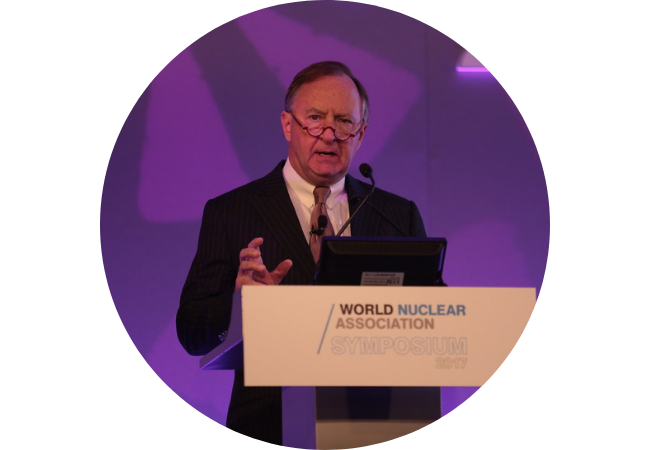
Fletcher played a key role in negotiating a contract for the purchase of UF6 feed component of down-blended LEU as part of the "Megatons-to-Megawatts" Agreement, and he was responsible for translating during critical meetings with Russian officials, the US government, and corporate representatives. His efforts were instrumental in ensuring the success of the partnership between Cameco, Cogema, and NUKEM. This agreement, which lasted 20 years, led to the down-blending of the equivalent of 20,000 warheads' worth of HEU, marking it as one of the most significant non-proliferation efforts since the Cold War.